Fisher & Paykel WODV230_N Double Oven Repair
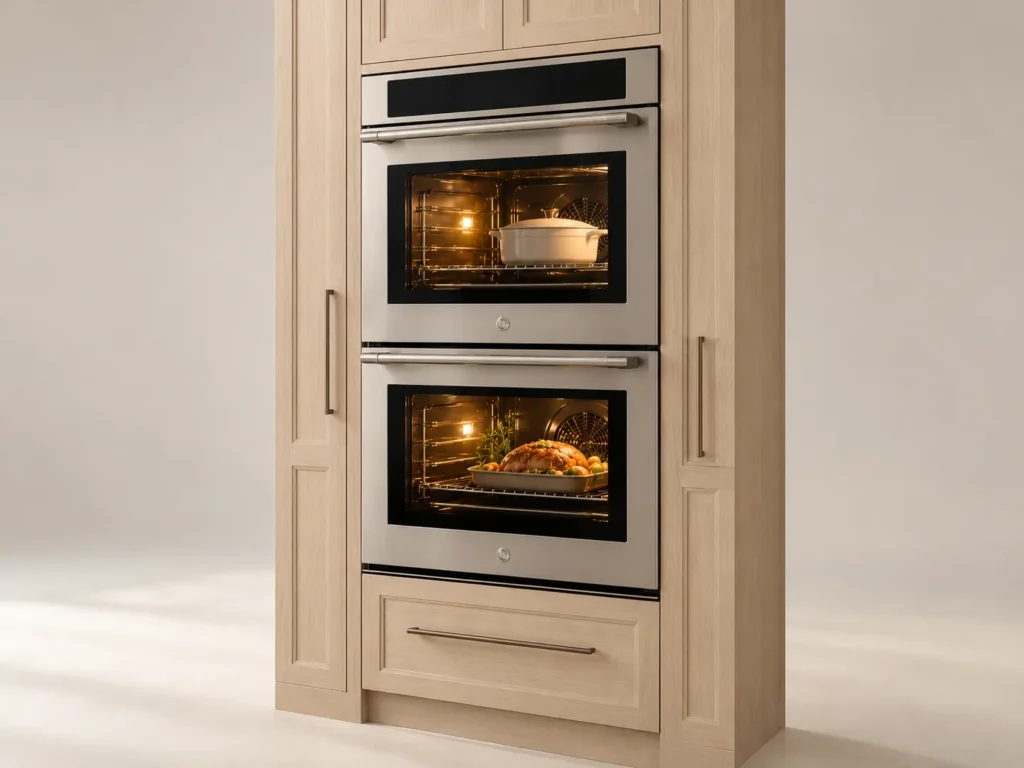
The WODV230_N stacks two ovens in one 30-inch wall cutout, giving 8.2 cu. ft. of total capacity, with 10 functions and self-clean. It is usually installed in a tall cabinet, and because both cavities share a control panel and wiring, a problem that looks like one oven failing can sometimes trace back to something both of them depend on.
That is why we test the cavities separately before opening anything. If the upper oven heats and the lower does not, the element, relay or sensor in the lower cavity is the suspect. If both are dead, we look at the control and the power supply. The lock on each door is checked after any self-clean complaint, since each cavity latches on its own.
We give you a written price first, and our repairs carry a 30-day workmanship warranty.
Usually yes, as long as the working cavity heats normally and the control panel responds. We would still test both before agreeing, because a shared control problem can eventually affect the second oven.
Many repairs, such as sensors, elements and lock switches, are done from the front with racks and panels out. A control or wiring problem inside the stack may need the unit pulled forward.
Slow preheating usually means a weak bake element or a sensor reading incorrectly. We measure resistance on the element and compare the cavity temperature against a thermometer to find which one it is.
Book in about a minute, or call the desk. Same-day windows inside the Loop on most days, next-day across the rest of Houston.